
Acollab, the first
collaborative software featured by Kicklox
In its article entitled “Top 10 of the Best Collaborative Tools for Remote Work”, Kicklox highlights Acollab as the leading French collaborative software to consider for improving teamwork.
This recognition is far from insignificant. It reflects the relevance of Acollab in a context where remote collaboration has become essential. Collaboration is now a key driver of performance for modern organizations. In a world shaped by remote work, hybrid models, and increased mobility, collaborative softwares are no longer optional : they are indispensable.
Yet, with the wide range of solutions available on the market, it can be difficult to find a tool that is both simple, efficient, secure, and truly suited to the specific needs of teams.
This is where Acollab stands out. Designed to make teamwork easier, it offers an intuitive platform that centralizes communication, supports project management, and strengthens team cohesion.
The digital collaboration revolution
In the past, collaboration happened around meeting tables, whiteboards, or shared coffee breaks. Today, it takes place in digital environments where geographical distance no longer matters. Collaborative softwares have become the new virtual offices.
Today’s challenges have evolved and now include:
- Smooth communication: avoiding information loss
- Data centralization: no more scattered files across emails, USB drives, or local servers
- Accessibility: enabling everyone to contribute, wherever they are
- Security: protecting sensitive data in an era of growing cyber threats
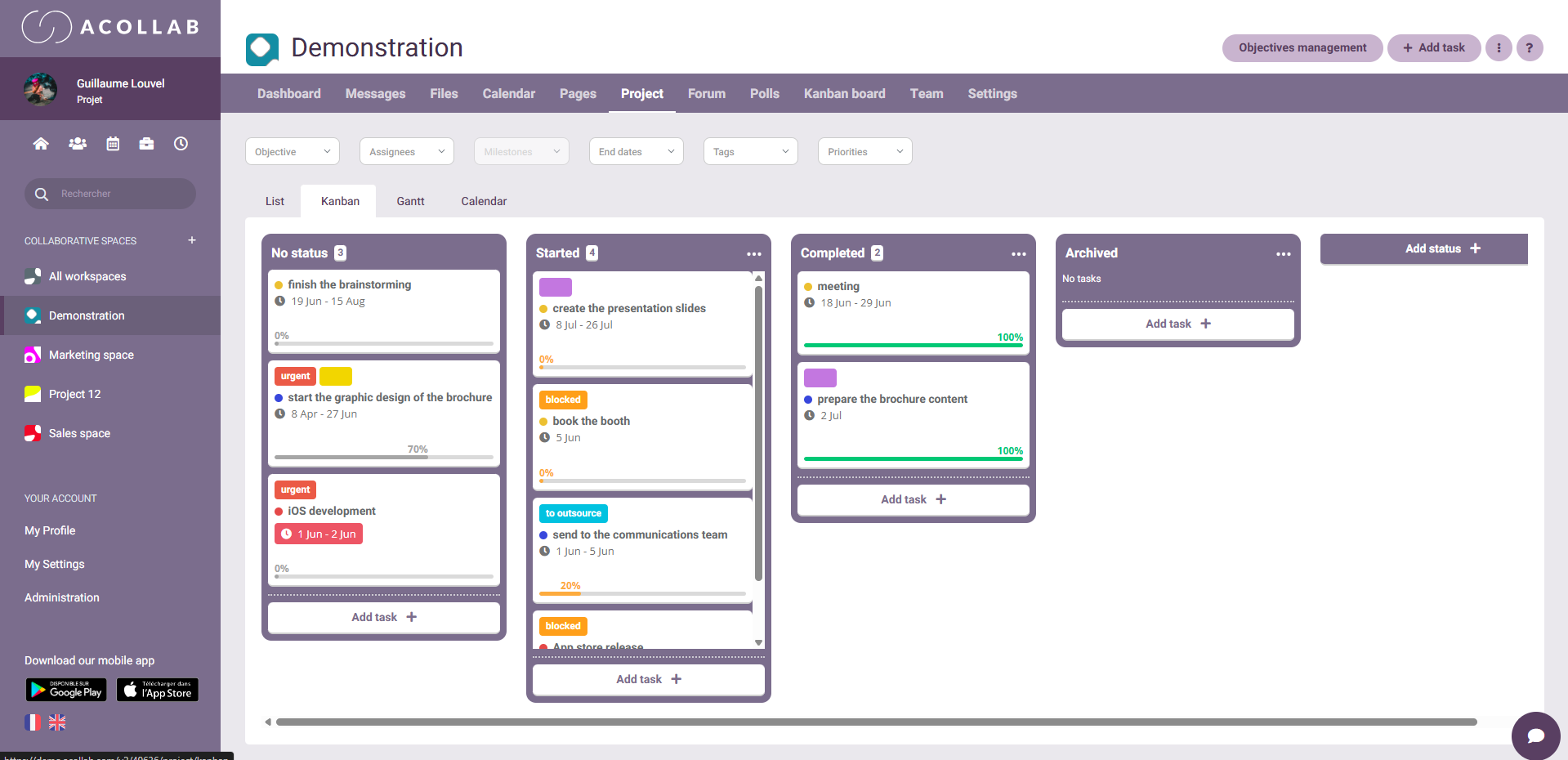
The rise of collaborative softwares
Collaborative softwares are increasingly adopted by organizations for several reasons:
- Remote and hybrid work: since the health crisis, remote work has become a standard practice, with teams often spread across multiple locations
- Productivity challenges: poor communication leads to misunderstandings and wasted time, making collaborative softwares essential to streamline workflows
- A fast-growing market: well-known platforms such as Google Drive, Teams, Slack, or Trello dominate the landscape, yet local and specialized solutions like Acollab stand out by offering a French alternative tailored to the needs of SMEs and small businesses
Acollab: a French alternative that stands out
Acollab is distinguished by its ease of use. Unlike complex tools that require extensive training, Acollab can be adopted quickly by teams of all sizes.
Its key features include:
Collaborative workspaces: each project or team has its own dedicated space
- File sharing: no more endless email attachments, everything is centralized
- Shared calendar: to coordinate meetings and deadlines
- Internal messaging: for fast and targeted communication
- Task management: assign, track, and validate tasks
What truly sets Acollab apart is its positioning: a made-in-France solution, designed for teams that want to work efficiently while maintaining full control over their data. In a market dominated by American tech giants, this uniqueness is a major advantage.
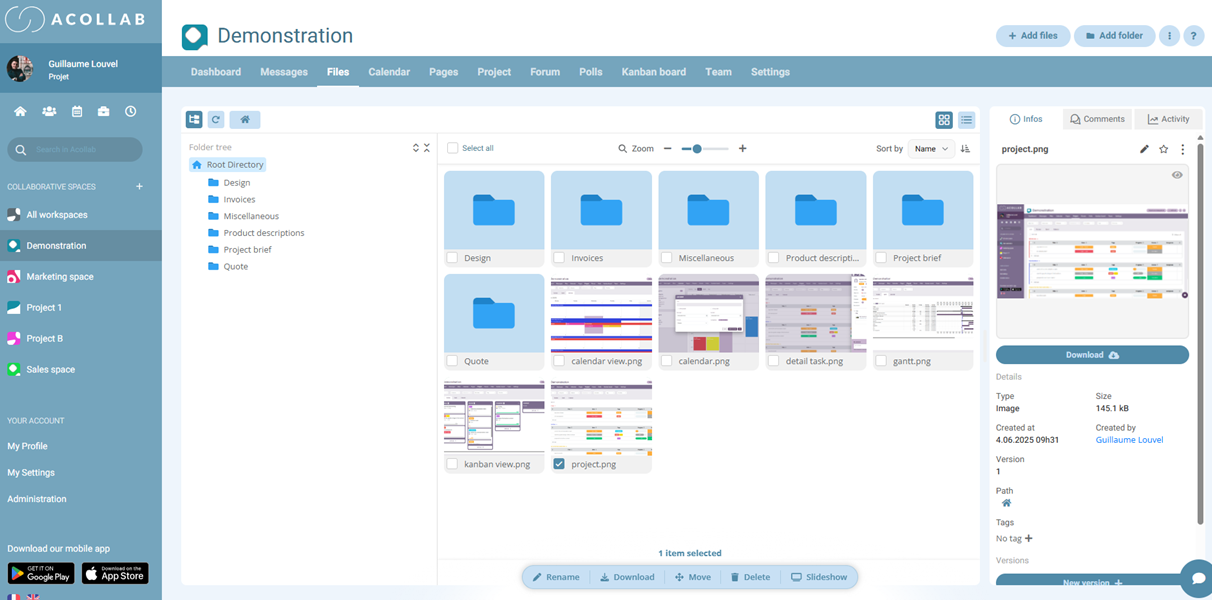
Acollab’s strengths compared to major market players
Unlike large international platforms, Acollab focuses on:
- Ease of use: an intuitive interface that requires no complex onboarding
- Data sovereignty: data hosted in France
- Flexibility: tailored to the specific needs of SMEs, associations, and public institutions
- Proximity and responsiveness: a human-sized team that supports and listens to its users
Real-world use cases
Many organizations rely on Acollab to:
- Coordinate non-profit and community projects
- Manage municipal or regional teams
- Improve internal communication within SMEs
SMEs
Small and medium-sized businesses often need a simple tool without unnecessary complexity.
For example, an industrial SME uses Acollab to coordinate production projects. Engineers share technical plans, sales teams track quotes, and management validates key milestones. The result: better visibility and shorter project timelines.

Non-profit organizations
A cultural association uses Acollab to organize events. With volunteers spread across different locations, the platform allows easy access to shared calendars, promotional materials, and logistics planning. Acollab becomes the central hub of the organization.
Local authorities
City councils, regional authorities, or local communities must manage multiple projects simultaneously.
For instance, a municipality uses Acollab to monitor urban planning projects. Elected officials, technical departments, and external partners collaborate within a single shared space, reducing duplication and improving transparency.
These examples highlight Acollab’s ability to centralize essential tools for any team: shared calendars, file management, project tracking, time tracking, messaging, surveys, forums, and more.
Conclusion
Acollab is not just another collaborative software. It represents a vision: simple, secure, and human-centered collaboration. By focusing on digital sovereignty and close relationships with its users, Acollab positions itself as a credible and high-performing alternative to major international platforms.