
Benefits of Kanban boards
for project managers
In modern project management, the pursuit of efficiency, clarity, and agility is constant. Whether they work in a small business, a startup, or a large organization, project managers must juggle planning, task tracking, team communication, and client satisfaction. In this context, the Kanban board stands out as a simple, visual, and highly effective tool. Inspired by the Japanese method of the same name, it helps teams visualize workflows, identify bottlenecks, and continuously improve processes.
Kanban: a workflow-focused approach
The word “Kanban” comes from Japanese and literally means “signboard” or “visual card.” Historically, the method was developed by Toyota in the 1950s to improve inventory management and just-in-time production. The idea was to visually signal the need for components at each stage of the manufacturing process. Applied to project management, the same principle remains: visualize task progress and optimize workflow.
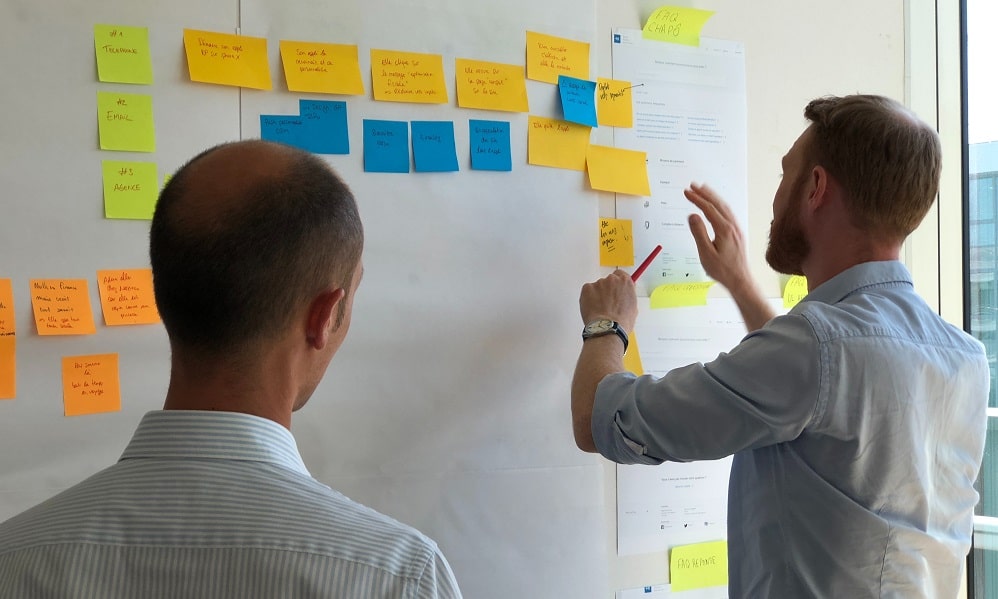
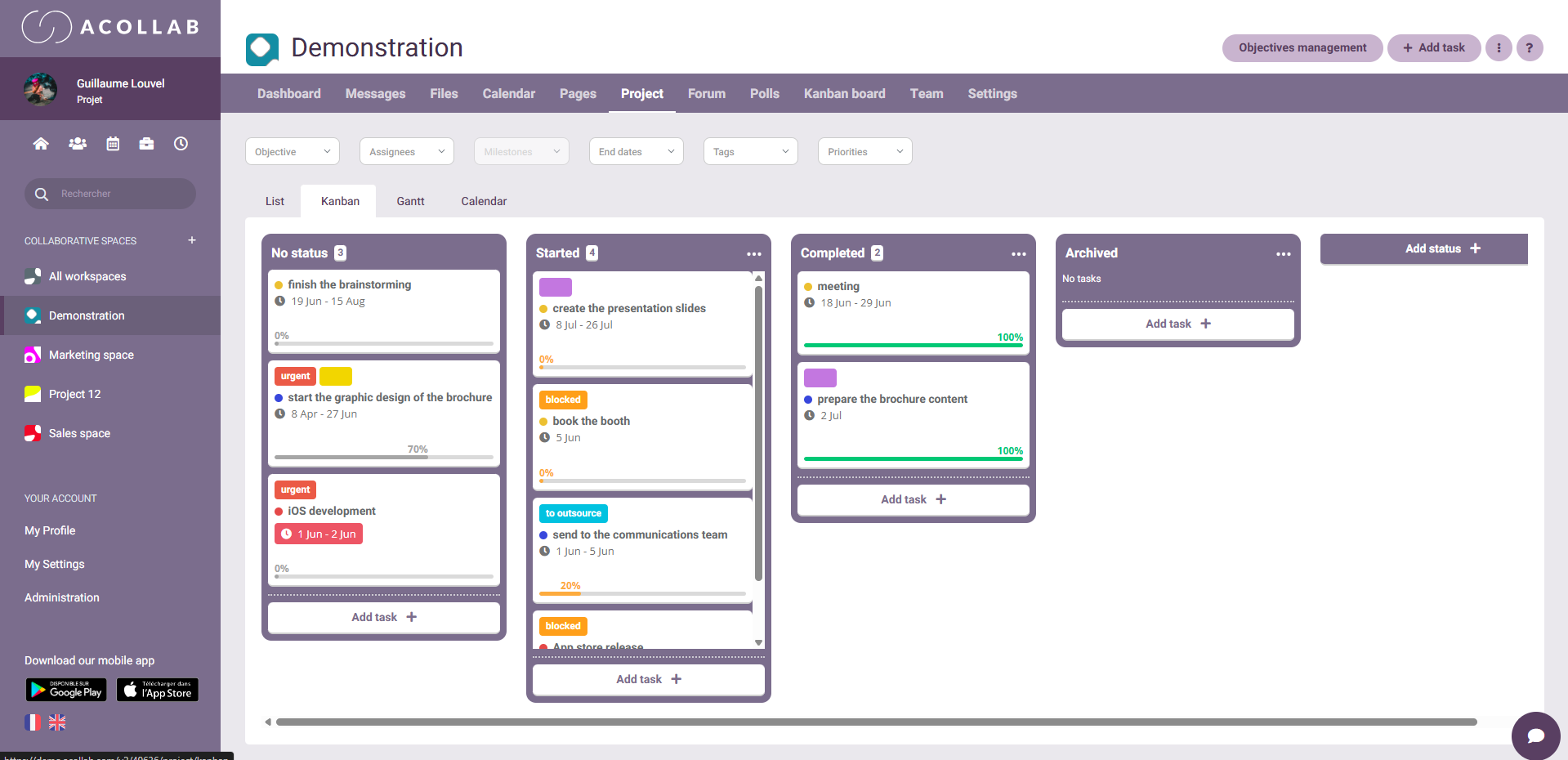
A Kanban board typically consists of several columns representing different stages of a process, such as “To Do,” “In Progress,” and “Done.” Each task is represented by a card that moves from one column to another as work progresses. This system gives project managers an immediate overview of project status without having to dig through reports or spreadsheets.
The strength of Kanban lies in its simplicity. At a glance, project managers can identify pending tasks, bottlenecks, or overloaded team members. This visual clarity supports faster decision-making and easier prioritization.
A tool for managing workload
One of the main challenges faced by project managers is balancing workloads across team members. Some employees may become overloaded while others have little to do. Kanban boards address this issue effectively by representing each task as a card assigned to a specific team member, making responsibilities immediately visible.
If the “In Progress” column contains too many cards assigned to the same person, the project manager can quickly identify a potential workload issue and redistribute tasks or adjust priorities. Kanban therefore becomes a real-time workload management tool.
Collaborative platforms such as Acollab help teams organize their daily work through Kanban boards, allowing users to visualize priorities and focus on completing ongoing tasks before starting new ones.
This approach improves productivity and reduces the accumulation of unfinished work. Project managers can ensure that workflows remain smooth, priorities are respected, and team members work at a sustainable pace.
Improving communication and transparency
Communication is a cornerstone of successful project management. However, in distributed or multidisciplinary teams, maintaining a shared understanding of project progress can be challenging. Kanban boards solve this problem by making information visible and accessible to everyone.
Each card contains key information about the task, including its description, assignee, deadline, attached documents, and comments. This centralization reduces lengthy email exchanges and minimizes information loss. Project managers no longer need to individually ask team members for status updates.
Transparency also has a positive impact on team motivation. Team members can clearly see project progress and understand how everyone contributes to overall success. Moving a card from “In Progress” to “Done” often feels like a small collective achievement. This simple mechanism can significantly strengthen team engagement and collaboration.
Kanban boards also provide an excellent framework for project review meetings. Instead of presenting static reports, project managers can display the board and discuss tasks directly with the team, leading to more practical and productive conversations.

A better way to manage unexpected events
Every project manager knows that no project ever goes exactly as planned. Delayed suppliers, changing customer requirements, or technical issues are all part of everyday project life. In this context, Kanban’s flexibility becomes a major advantage.
Unlike more rigid methodologies, Kanban does not require exhaustive planning upfront. Tasks can be added, modified, or reorganized at any time. If a new priority emerges, a project manager can simply create a new card and place it in the appropriate column.
This flexibility allows teams to react quickly without disrupting the entire workflow.
Furthermore, visualizing the workflow helps identify problems before they become critical. If multiple tasks remain stuck in the same column, it may indicate a bottleneck. The project manager can then investigate the root cause, whether it’s a resource shortage, technical dependency, or pending approval, and take corrective action.
An ideal framework for collaborative work
Modern projects are rarely completed by a single individual. They typically involve a variety of skills, including development, design, marketing, communication, and operations.
The Kanban board serves as a common workspace where all these areas of expertise come together.
Every team member can see the overall progress of the project and understand how their work contributes to the bigger picture. This improves coordination and reduces the risk of duplicated efforts.
Project managers can use Kanban boards to assign responsibilities, monitor task progress, and maintain consistency across the project.
Within a collaborative environment such as Acollab, Kanban boards are integrated into a complete workspace that also includes messaging, document sharing, task management, and shared calendars. Project managers benefit from a cohesive ecosystem that supports every aspect of project management.

A tool that adapts to every type of project
One of Kanban’s greatest strengths is its flexibility. It does not impose a rigid methodology but instead adapts to the realities of each team.
Whether the project is technical, creative, administrative, or event-related, the Kanban board can be customized to reflect the team’s specific workflow.
For example, a digital project manager might use columns such as ideas, design, development, testing and deployment. An event management agency might prefer : preparation; production, communication, event Day, closure.
In every case, the principle remains the same: tasks move from left to right until they are completed.
Some project managers use a single board for the entire project, while others create separate boards for different teams or clients. This adaptability makes Kanban relevant across a wide range of industries and project types.
Encouraging accountability and autonomy
Kanban is not only a project management tool for project leaders : it is also a powerful way to empower teams.
By making priorities visible, it enables team members to understand what needs to be done without waiting for constant instructions.
This transparency encourages accountability. Team members become proactive, take ownership of their work, and contribute to maintaining a smooth workflow.
As a result, the project manager’s role evolves. Instead of micromanaging tasks, they focus on ensuring that the system functions effectively and that obstacles are removed quickly.
This shift fosters trust, motivation, and stronger team engagement, creating a positive cycle where collaboration becomes more natural and efficient.
The added value of digital tools such as Acollab
In today’s increasingly digital work environment, technology plays a critical role in project success. When integrated into a collaborative platform like Acollab, Kanban boards reveal their full potential.
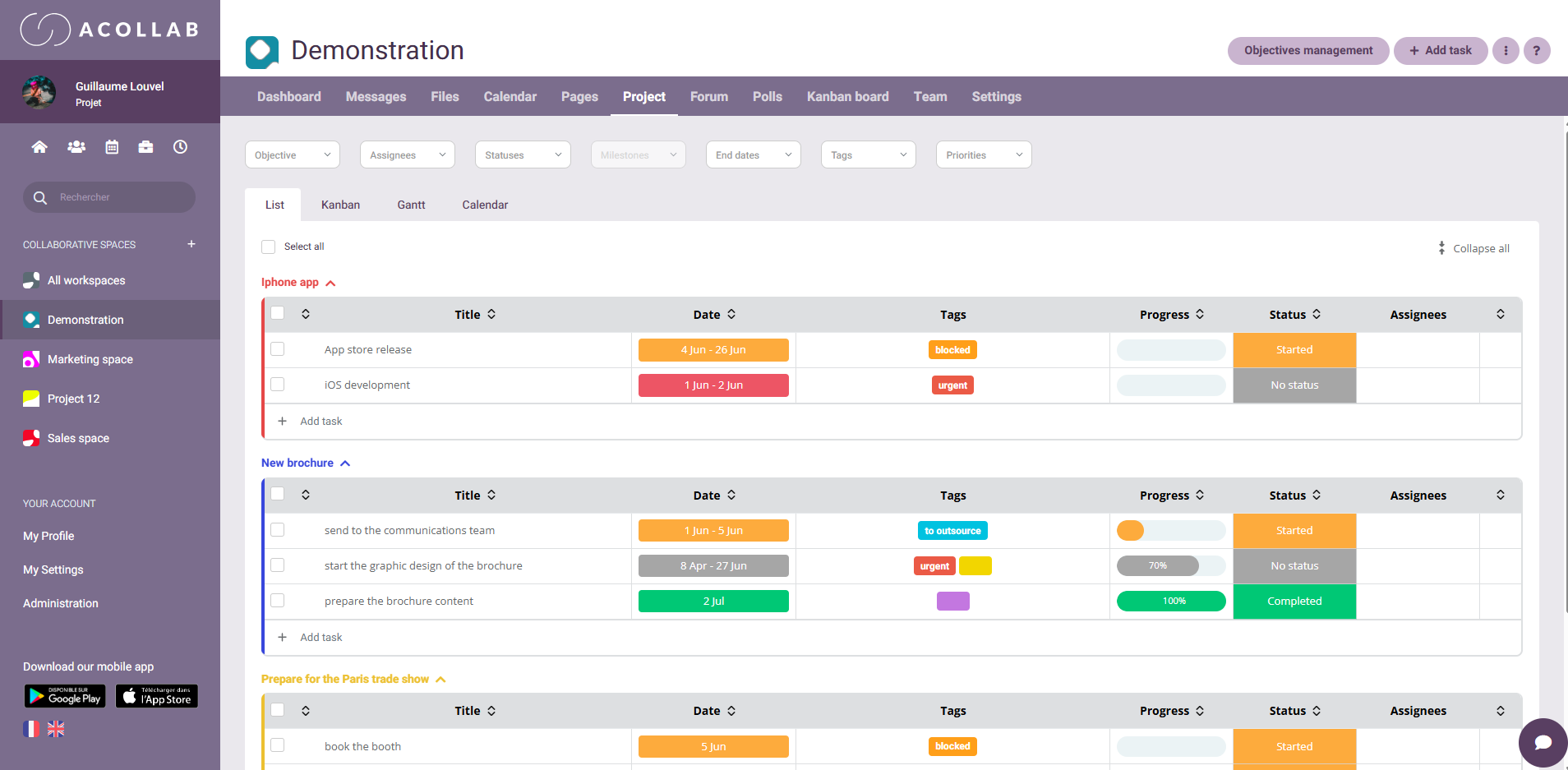
Acollab allows users to create customized Kanban boards tailored to the specific needs of each project. Project managers can add columns, priority labels, deadlines, and assign tasks to individual team members.
Cards can include attachments, comments, and external links.
Automatic notifications and reminders help ensure that nothing is overlooked. Thanks to the board’s overview capabilities, project managers can maintain control of project progress even when working remotely.
By integrating Kanban into a complete collaborative workspace that includes communication and document-sharing tools, Acollab eliminates information silos. Everything is centralized in one place, improving consistency and productivity.
Conclusion
For project managers, a Kanban board is much more than a simple task management tool. It is a visual, collaborative, and adaptable management method that helps prevent bottlenecks and improve team performance.
Its simplicity makes it accessible to everyone, while its flexibility allows it to fit a wide variety of project environments.
By adopting a digital Kanban board such as the one offered by Acollab, project managers benefit from a centralized solution to organize, monitor, and continuously improve their projects with full transparency.
It is a practical way to increase efficiency, strengthen team collaboration, and successfully deliver projects with confidence and structure.