
Alternative à Microsoft Teams
Microsoft Teams est aujourd’hui l’un des outils les plus utilisés pour la communication et la collaboration en entreprise. Pourtant, de nombreuses organisations recherchent une alternative plus simple, plus flexible ou mieux adaptée à leurs besoins spécifiques.
Pourquoi chercher une alternative à Teams ?
Microsoft Teams est un outil collaboratif puissant, mais peut devenir complexe à configurer et à utiliser au quotidien, notamment pour les petites équipes ou les structures qui veulent aller à l’essentiel.
Les principales limites souvent citées sont :
- Une interface jugée complexe
- Une surcharge fonctionnelle
- Une intégration parfois lourde dans l’écosystème Microsoft
- Une courbe d’apprentissage importante
Une alternative plus simple et centralisée
Acollab propose une approche différente de la collaboration en ligne. L’objectif n’est pas de multiplier les outils, mais de centraliser l’essentiel dans un espace unique.
Avec Acollab, les équipes peuvent :
- Communiquer facilement
- Gérer leurs projets
- Partager des documents
- Suivre les tâches
- Collaborer avec des clients ou partenaires
Acollab vs Microsoft Teams
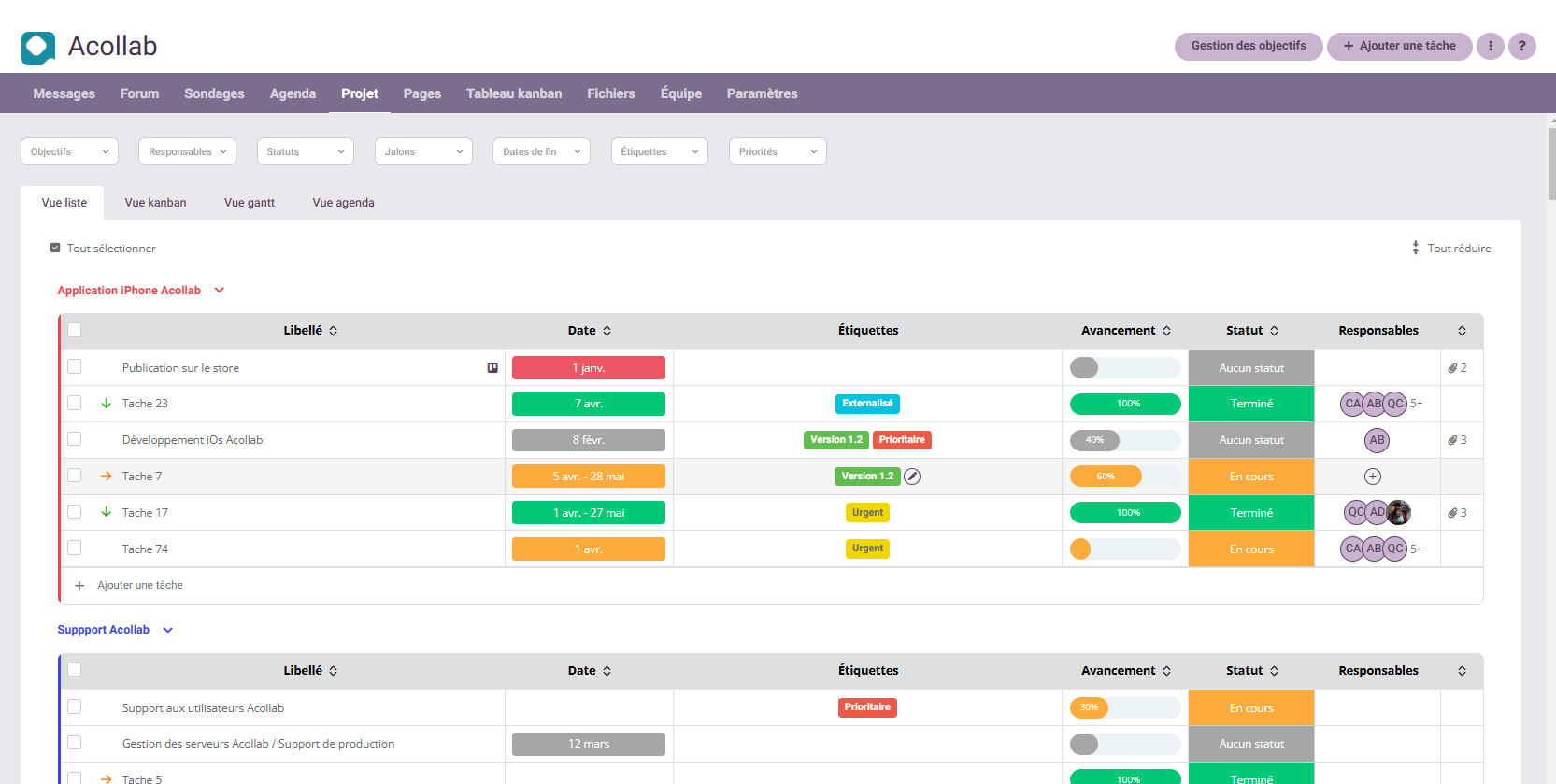
Contrairement à Microsoft Teams, qui se concentre fortement sur la communication, Acollab intègre nativement la gestion de projet et l’organisation du travail.
| Fonctionnalité | Microsoft Teams | Acollab |
|---|---|---|
| Messagerie | Oui | Oui |
| Visio / réunions | Oui | Non |
| Gestion de projet | Partielle (via Microsoft Planner / To Do) | Complète |
| Gestion documentaire | Oui (via SharePoint / Microsoft 365) | Native |
| Suivi des temps | Non | Oui |
| Agenda partagé | Oui (via Outlook / Microsoft 365) | Oui (natif) |
| Centralisation des outils | Partielle (écosystème Microsoft) | Totale (tout-en-un) |
| Prise en main | Moyenne à complexe | Simple et rapide |
| Orientation principale | Communication & réunions | Gestion de projet & collaboration |
| Dépendance | Forte (Microsoft 365) | Faible |
| Hébergement des données en France | Non | Oui |
Microsoft Teams est avant tout un outil de communication et de collaboration en temps réel.
Acollab, de son côté, se positionne comme une plateforme de travail collaboratif, permettant de structurer les projets, les agendas et les documents dans un espace unique.
Le choix dépend donc principalement du besoin de l’équipe :
- communication pure et réunions → Teams
- organisation du travail de l’équipe → Acollab
Pour qui Acollab est-il une bonne alternative à Teams ?
Acollab est particulièrement adapté pour :
- Les TPE
- Les PME
- Les agences
- Les collectivités
- Les équipes projet
- Les organisations cherchant un outil tout-en-un simple
L’évolution des besoins des équipes
Aujourd’hui, les équipes ne cherchent plus uniquement un outil pour discuter ou organiser des réunions.
Elles ont besoin de :
- structurer leurs projets
- suivre les tâches en temps réel
- centraliser les documents
- partager leurs agendas
- gérer les priorités
- collaborer avec des clients externes
- réduire le nombre d’outils utilisés
C’est cette évolution des usages qui pousse de nombreuses organisations à rechercher une alternative plus intégrée à Teams.
Conclusion
Si Microsoft Teams est une solution très complète pour les organisations déjà intégrées dans l’écosystème Microsoft, Acollab se positionne comme une alternative plus simple, plus centralisée et orientée gestion de projet.